


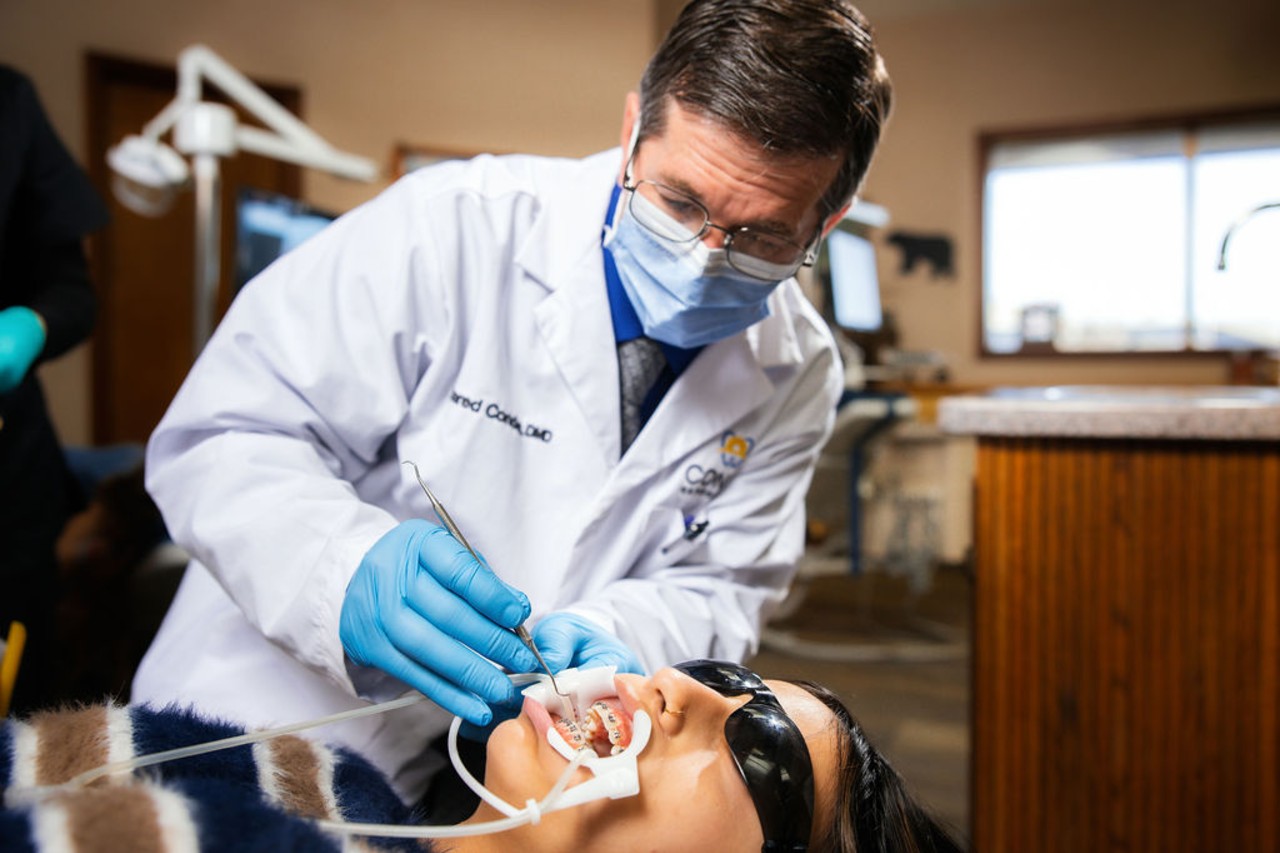
You’re ready to straighten your teeth. You see ads for Invisalign everywhere, but braces feel more traditional.
The question is simple, but you need to know the answer. Which one is right for you?
A 2022 clinical study found that 17.2% of patients who began Invisalign switched to braces before finishing treatment, often due to complex orthodontic issues or bite problems. That shift shows that the appliance matters less than who manages it.
Invisalign and braces both move teeth. Both correct severe crowding and bite concerns. The difference lies in diagnosis, treatment planning, and supervision by an orthodontist who understands how teeth and jaws function in the long term.
What you’ll learn in this guide:
- How Invisalign treatment works
- How traditional braces move teeth
- When orthodontic problems require advanced management
- Why orthodontist-led care improves long-term results
Understanding Your Orthodontic Treatment Options
Patients compare invisalign vs braces because both treatments straighten teeth and improve bite alignment. Each treatment method applies steady pressure to guide teeth into healthier positions. The difference lies in how that force is delivered.
Clear aligners and metal brackets are tools. Treatment success depends on case selection and clinical planning. An orthodontist evaluates spacing, dental issues, and jaw structure before recommending either orthodontic treatment option.
What Is Invisalign?
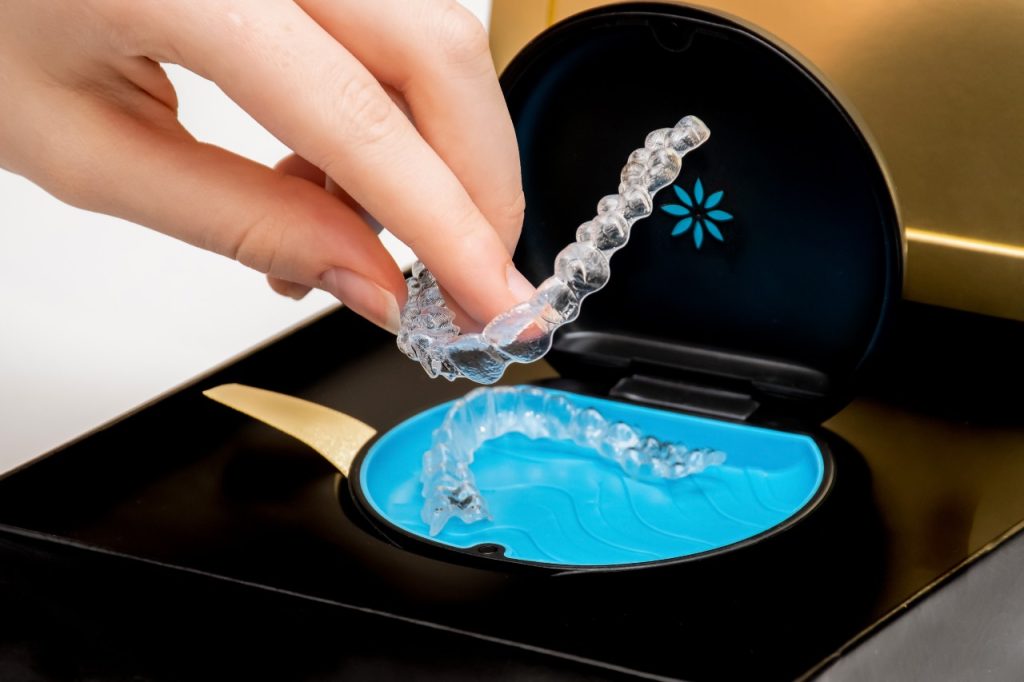
Invisalign is a clear aligner system designed to straighten teeth without metal brackets or wires. The treatment uses a series of custom-made, removable trays that gradually shift teeth into proper alignment. Each set of aligners is worn for a prescribed period before progressing to the next stage.
Unlike fixed braces, Invisalign aligners can be removed for eating and brushing. That flexibility appeals to teens and adults who want a more discreet orthodontic option. However, consistent daily wear is required to achieve predictable results.
How Invisalign Moves Teeth
Each aligner applies controlled pressure to specific teeth based on a digital treatment plan. The aligners are fabricated in stages, with each tray building on the movement achieved by the previous one. Over time, bone remodels around the shifting teeth to support their new position.
Orthodontists monitor progress and make adjustments when necessary. Attachments may be placed on certain teeth to increase control. That added precision helps manage more complex movements when guided by proper supervision.
When Invisalign May Be the Right Choice
Invisalign works well for mild to moderate crowding and spacing concerns. Many patients prefer the nearly invisible appearance during social and professional interactions. The removable design also makes oral hygiene easier throughout treatment.
Success depends heavily on patient compliance. Aligners must be worn as directed each day to stay on schedule. Orthodontist oversight determines whether Invisalign is appropriate for your specific bite and jaw structure.
What Are Traditional Braces?
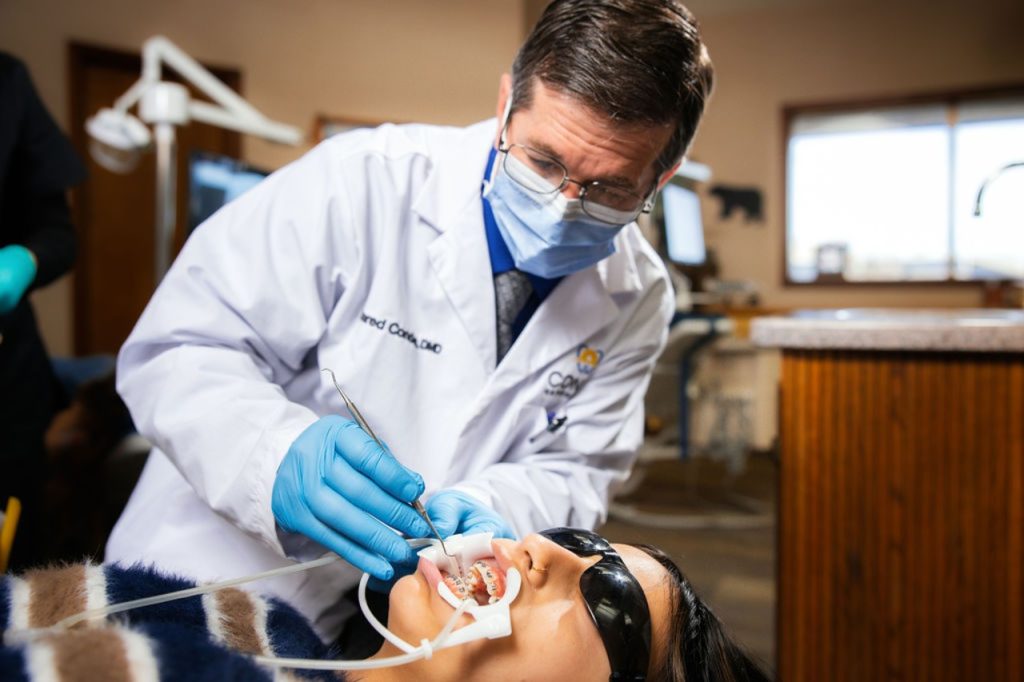
Traditional braces remain the most reliable way to guide teeth into proper alignment. The system of brackets and wires remains fixed throughout the process. Continuous pressure allows steady, controlled tooth movement.
Orthodontists adjust metal braces at scheduled visits. Each visit changes the wire tension and tooth position. That level of control supports the correction of more complex cases.
How Braces Move Teeth
Metal brackets bond directly to each tooth. A wire connects them and applies a gradual force. The force shifts teeth through the surrounding bone over time.
Elastics or additional components may be added to correct bite alignment. Adjustments target specific areas of the mouth. Progress is monitored at each appointment to reach the desired position.
When Braces May Be the Better Choice
Traditional braces work well for severe crowding and significant bite correction. They allow precise control of rotation and vertical movement. Severe misalignment issues respond well to fixed appliances.
Patients who struggle with Invisalign aligners may benefit from metal braces. Because they stay in place, treatment does not rely on daily patient compliance. The orthodontist directs movement without interruption.
Invisalign vs Braces: Key Differences
Patients comparing invisalign vs braces usually focus on aesthetics and comfort first. Those factors matter, but they do not tell the full story. Treatment control, oral hygiene, and daily discipline influence long-term results.
| Feature | Invisalign Treatment | Braces |
| Appearance | Removable aligners | Visible brackets and wires |
| Comfort | Smooth plastic trays | May cause soreness |
| Treatment Time | Depends on the case | Depends on adjustment |
| Hygiene | Removed for brushing | Brushing around brackets |
| Discipline | Daily wear commitment | Fixed and always active |
Invisalign treatment places responsibility on the patient. Missed wear time slows progress. Close monitoring keeps tooth movement on schedule.
Braces apply constant pressure. They allow stronger control for complex movement. An orthodontist determines which orthodontic treatment fits the diagnosis.
Which Cases Require More Advanced Orthodontic Management?
Not every orthodontic case is mild. Some dental health issues involve deeper bite problems or jaw imbalance. These situations require careful diagnosis and stronger fixed appliances.
The American Association of Orthodontists recommends that children receive an orthodontic evaluation by age 7 to detect developing bite and jaw concerns early. Early evaluation helps identify cases that require structured orthodontic management.
Severe Crowding and Bite Correction
Severe crowding can prevent teeth from erupting properly. Overbites, underbites, and crossbites affect how the upper and lower teeth meet. These conditions influence chewing and long-term tooth wear.
Complex rotations or vertical movement may require fixed appliances. Metal braces allow stronger directional control in complex cases. An orthodontist determines whether Invisalign treatment or traditional braces provide better correction.
Growth and Jaw Development in Younger Patients
Jaw growth continues through childhood and adolescence. Monitoring that growth allows timely correction of spacing or alignment problems. Treatment timing affects long-term stability.
Early intervention may reduce the need for more invasive procedures later. Orthodontists carefully evaluate skeletal patterns and bite development. Professional supervision guides treatment decisions as the mouth matures.
Why Orthodontist-Led Treatment Matters

Both Invisalign treatment and traditional metal braces require more than appliances. Tooth movement affects bone, bite function, and long-term oral health. Proper supervision guides each phase of movement.
Orthodontists receive specialized training beyond dental school. That training focuses on bite correction and controlled tooth movement. Experience matters when cases grow more complex.
Diagnosis and Treatment Planning
Orthodontic treatment begins with a detailed evaluation. Digital scans, X-rays, and bite analysis reveal structural concerns. A precise treatment plan maps out each stage of tooth movement.
Clear aligners and metal braces rely on that planning. Small errors in diagnosis affect final alignment. Professional oversight reduces the risk of incomplete correction.
Monitoring and Long-Term Stability
Teeth do not always move exactly as predicted. Regular monitoring allows adjustments during treatment. Timely changes keep progress on schedule.
Long-term stability depends on retention and proper bite balance. An orthodontist evaluates how teeth meet and function after movement. Careful follow-up reduces relapse.
Invisalign and Braces for Different Age Groups
Orthodontic treatment looks different at each stage of life. Growth patterns, lifestyle, and orthodontic needs all influence whether Invisalign or traditional braces are recommended.
Both teens and adult patients benefit from professional supervision. The difference lies in the timing of growth and long-term planning.
Teens
Younger patients are still developing. Jaw growth and tooth eruption patterns must be monitored carefully. Braces may provide stronger control for active bite correction.
Invisalign treatment is available for teens, but patient compliance remains essential. Missed wear time slows movement and affects results. Regular monitoring keeps treatment on track.
Adult Patients
Adult patients no longer experience jaw growth. Treatment focuses on alignment, spacing, and bite balance. Invisalign is often chosen for its lifestyle-friendly design and flexibility.
Traditional braces remain an option for complex cases in adults. Fixed appliances allow precise mechanical control. An orthodontist determines which treatment plan best supports the diagnosis.
Common Misconceptions
Patients researching invisalign vs braces encounter strong opinions online. Marketing messages can blur expectations. Clear guidance separates preference from clinical reality to help you make an informed decision.
1. “Invisalign Works for Everyone”
Invisalign treatment works well for many cases, but not all. Severe bite problems or complex rotations may require fixed appliances. An orthodontic evaluation determines suitability.
Case selection matters more than convenience. Invisalign aligners depend on consistent wear and precise tracking. Professional supervision protects long-term results.
2. “Braces Are Only for Kids”
Traditional metal braces are not limited to children or teens. Adult patients with complex orthodontic issues may benefit from fixed appliances. Treatment decisions depend on diagnosis, not age.
Orthodontic care focuses on tooth movement and bite balance. Age influences planning but does not restrict options. Adults complete successful treatment with braces.
3. “Clear Aligners Are Always Faster”
Treatment time depends on case complexity and patient compliance. Invisalign may move efficiently in moderate cases. More advanced corrections may require longer planning.
Braces apply constant pressure. In complex cases, they may complete movement more predictably. An orthodontist sets realistic timelines for each case.
What to Expect During a Consultation

A consultation provides clarity before treatment begins. Both Invisalign and traditional braces require careful evaluation to determine the right orthodontic treatment. The goal is to match treatment to diagnosis, not preference.
Digital Scans and Comprehensive Evaluation
Orthodontic consultations begin with digital scans and imaging. These tools show tooth position, jaw alignment, and bite function. A full evaluation reveals orthodontic problems that may not be apparent at first glance.
Discussion focuses on spacing, severe crowding, and bite correction. The orthodontist explains how Invisalign treatment or metal braces would address those issues. Clear expectations are set from the start.
Personalized Treatment Recommendations
Every case receives a treatment plan built around individual findings. The recommendation explains whether Invisalign or traditional braces will move teeth more predictably. Timing and projected movement are outlined clearly.
At your initial consultation, you will discuss goals, treatment time, and daily commitment. Transparency prevents surprises during treatment. Professional oversight keeps progress aligned with the plan.
Choosing the Right Orthodontic Treatment
Choosing between invisalign vs braces should never feel like guesswork. At Condie Orthodontics, we guide every patient through a thorough evaluation before recommending treatment. Our focus stays on bite function, stability, and long-term oral health.
We have treated teens and adult patients with both Invisalign treatment and traditional metal braces. We know each smile presents different structural needs and movement challenges. Our experience allows us to plan precisely and monitor progress carefully from start to finish.
Schedule a consultation with Condie Orthodontics to determine whether Invisalign or traditional braces are the right fit for your smile and long-term oral health.